
Tips & Tricks: Turning Solo Journaling Games Into Group Games for Your Family, Class, Library, or Convention Group!
Ever find a solo journaling game and REALLY want to share it with your friends and family during game night? Or want to bring it to a whole bunch of people at a library or convention? Or realize that it could be a GREAT educational tool? Here’s some of my tips and tricks for turning that solo journaling TTRPG into a group experience while staying true to the game’s core!
Note: This post may contain affiliate links. At no additional cost to you, I may earn a small commission from purchases made using them. TTRPGkids uses this to keep the site going. Read full disclosure here.
Jump to:
- 2-Players: Q&A
- Larger groups: Roundtable
- Larger groups: Collaborative character actions
- Larger groups: Create and compare
- Other suggestions
Looking for solo journaling games to try these methods out with? Check out my list here!
Solo Journaling TTRPGs for Larger Groups: Q&A Method (Recommended for 2 Players)
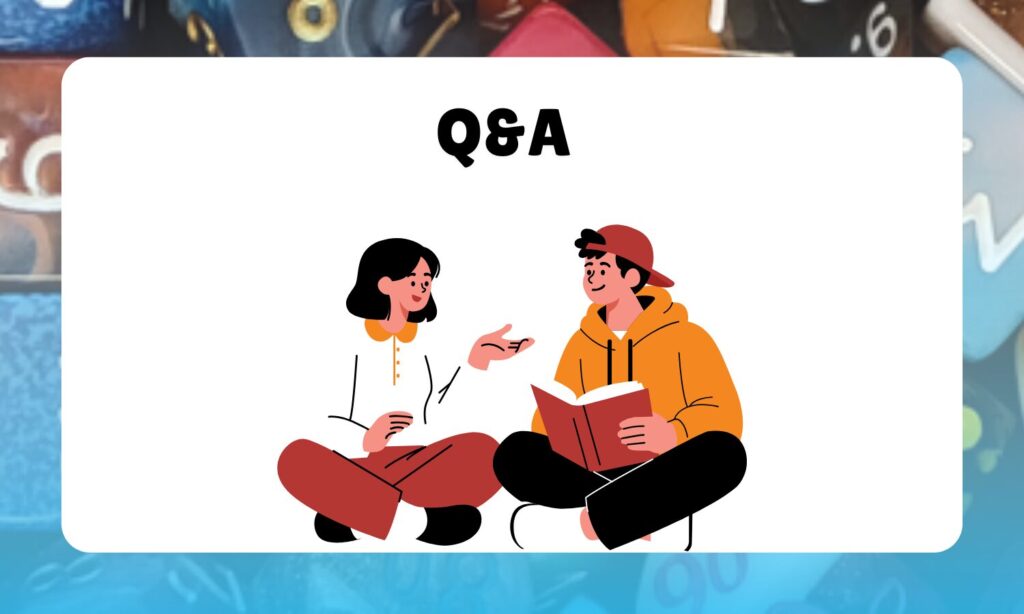
If you’re looking to play your solo-journaling TTRPG with just you and your kid or you and a partner or friend, especially if the other person is new, still learning to read, or has additional support needs, a back-and-forth Q&A method can work really well.
In many solo-journaling games, the game provides the single reader with prompts that are listed at key story points or that are generated from roll tables, drawing cards, etc. The player then extrapolates game events from those prompts, potentially rolls or draws cards to see how they fare or what changes in the game or with their character, and writes down what happens.
When I’m trying out games with my kid, I like to use a Q&A method so my child can more easily play and learn the solo journaling game, but I still get to be part of it and can help with teaching it.
What I’m calling the Q&A technique simply sets one person as the narrator (with my kid, this is usually me) and the other as the responder. The narrator reads story prompts to the responder, and the responder replies. The responder rolls or draws cards while the narrator helps interpret these and teach the rules to the responder. This method basically acts as an interactive storytime guided by the narrator.
I’ve used this method when playing Dragon Dowser, The Librarian’s Apprentice, Kittens & Dragons, and Complete the Quest with my kid, and I also had this method in mind when designing StoryGuider.
Strengths: lowering the entry barriers for the responder, providing options for 2-player game time, teaching role-playing games to new players
Weaknesses: needs some additional measures to effectively scale to larger groups, narrator may feel left out of story interactivity
Solo Journaling TTRPGs for Larger Groups: Roundtable (Recommended for 2-8 Players)
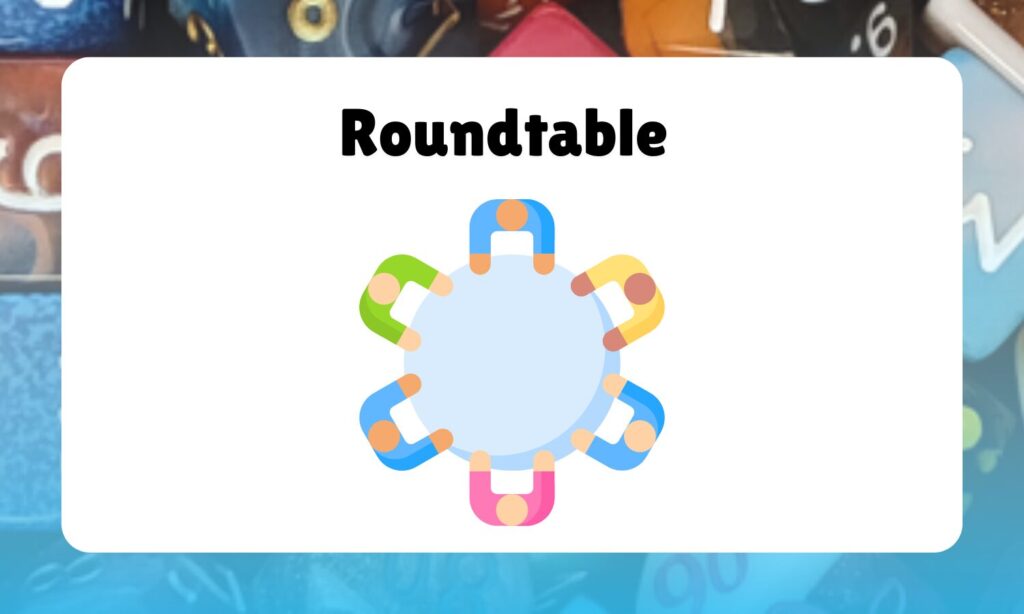
If you want to bring your solo journaling game to a small game night with friends, your bigger family, or something like a convention or library group, I’d recommend looking at a roundtable-style play option alongside the next couple methods.
For this method, you’ll go around the table with each player taking turns being in charge or answering prompts and filling in the story.
For taking turns, you can allow all players to discuss and have input but leave the ultimate decision up to the leading player for that turn. Alternatively, you can have the full turn be reserved for one person (so others need to stay quiet and let the one person have a turn), which may work well if there’s a player at the table that seems like they are dominating the conversation, interrupting, or overriding the story on other players’ turns.
You can also choose to run this with a GM who leads the prompts (similar to the Q&A method) or have this be a GM-less situation where the facilitator gets a turn as well.
I’ve used this method when facilitating Princess With a Cursed Sword and A Construct’s Nature at conventions.
Strengths: lowering the pressure for one person to complete the whole story, works well for midsized groups, allows each player to have the spotlight in the group, allows the facilitator to impact the story as well
Weaknesses: may feel slow for anxious or eager players to have to wait for their turn around larger tables, will probably cap out at about 8 players before it starts feeling REALLY slow
Solo Journaling TTRPGs for Larger Groups: Collaborative Character Actions (Recommended for 2-30 Players)
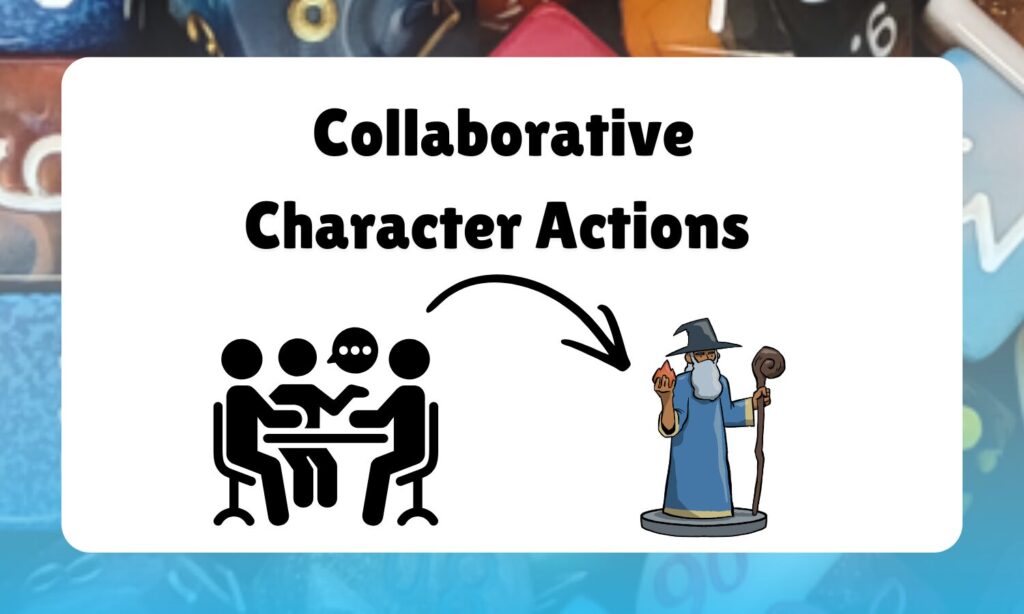
If you have a much larger group or if you have a group that seems like they can really cooperate well together, having the whole group make a single decision for the game can be a fun method for sparking some interesting conversations and finding ways to include everyone in the process at every step.
This technique involves letting the group discuss, debate, and decide what their collective response to the game’s prompts will be. Together, they’ll need to settle on one decision by either having a self-moderated group discussion OR having a facilitator moderate the discussion by directing players in taking turns, engaging players who aren’t speaking up, and working out any disputes.
I’ve used this method when facilitating A Construct’s Nature and StoryGuider at conventions and built this into both games so they could be run with classrooms. I also think this method would work particularly well with most other solo journaling TTRPGs that I’ve come across (list here).
Strengths: allows for play with very large groups and with classroom settings, teaches debate and collaboration, great for team building
Weaknesses: takes longer to run due to needing time for group discussion, susceptible to some players dominating the conversation or interrupting others unless there’s a good moderator/facilitator
Solo Journaling TTRPGs for Larger Groups: Create and Compare (Recommended for 2-30 Players)
If you’re OK with some quiet time during game play, have some space between meet ups, or have online sessions, having each participant play their game separately and then compare can be another method that allows for sharing of the game with a group.
Here, each player will journal their own separate response to that game’s prompt and then share this with the group verbally or by posting or submitting it (if it’s online or part of a homework assignment) before moving onto the next prompt. Essentially, this allows each player to go on a separate but parallel path to others in the same group.
For solo journaling games that have a somewhat modular storyline (ensuring everyone is either operating in parallel or you have kind of one-shot events), this is pretty easy to run and track. For something like Princess With a Cursed Sword or Dragon Dowser, each turn, each player is in a different room or has a single prompt that they create and resolve within that room or event before moving onto the next thing. While the events of that room or event can influence your particular story or view of the thread you’re individually creating, it does still leave you with something that’s easy to share and follow for others. You can describe the prompt quickly depending on the card you flip/pull and explain what you think it means and how you handle it without others needing to remember your full story. They can engage with your individual “turn story” without remembering what you did last turn so they aren’t tracking a dozen threads.
For solo journaling games that change drastically depending on your previous turn and follow a more flowing or open-world narrative or LOTS of choices that link together, like Captain’s Log, I wouldn’t expect folks to remember everything from everyone’s last turn, so I treat this more like episodes or coming back from a commercial break, so we’ll give a short recap. Something like… “last time on the adventures of Captain Sural, he was in the middle of a collapsing chamber in the ancient ruins of an unregistered planet….” before getting into your new story parts.
I factored this method into the teaching guide for A Construct’s Nature and believe this would work really well for games like Captain’s Log and Sidekick Story in addition to most other solo journaling games. Also, while it isn’t marked as a solo journaling game, this method is kind of used for 500 Year Old Vampire where everyone kind of goes their separate ways, journals and crafts, then comes back together to share, and it works really well for classrooms.
Strengths: allows for play with very large groups and with classroom settings, can create a gradable assignment for classes, allows use of the game with basically no modification except that addition of sharing, allows each player to run the game and create how they personally want, allows multiple options for sharing (verbal, written, etc) without disrupting flow
Weaknesses: sharing time can be long and may be hard for folks with low attention span to listen to others, may become confusing for some players to listen to or read multiple storylines, can be a lot to manage for very large groups if it’s not part of a class assignment (i.e. may work well for classes but not for conventions)
Solo Journaling TTRPGs for Larger Groups: Other Suggestions
Beyond what I have above, there’s other modifications you can make, so, if you think of something, try it out!
I’d also recommend trying to combine different methods. For example, when I GM A Construct’s Nature, I’ll sometimes have one prompt use the roundtable method and the next one use the collaborative character actions method. For StoryGuider, I may do a collaborative character action round followed by a create and compare round where kids color a picture or map then share with the group.
Alternating types of rounds can help balance out some of the weaknesses between them so you aren’t stuck annoying one player by having the same method that doesn’t work for them EVERY round. It also helps keep players engaged by letting them figure out a different way to interact with other players from turn to turn and can be an opportunity for players to practice a wider range of skills.
My main message here is to experiment a little bit and see what feels right for you, your group, and the game you want to share with others! I hope this gives you a toolbox to draw from, and I hope you find some new ways to enjoy the solo journaling games you love!
If you liked this post, make sure to subscribe to the TTRPGkids monthly newsletter to stay up to date on the latest reviews, tips and tricks, game and podcast list updates, and more! Thank you for playing tabletop RPGs with your kids and sharing this awesome hobby with the next generation!