
Interview with Dr. Springle about TTRPGs x speech language pathology!
Via connection through Jennifer Siler, Dr. Alisha Springle and I chatted about how she uses TTRPGs in her speech and therapy practice, Play on Words! Check it out to learn about what methods Dr. Springle uses, what she’s seen, and the impact her work is having on kids.
Note: This post may contain affiliate links. At no additional cost to you, I may earn a small commission from purchases made using them. TTRPGkids uses this to keep the site going. Read full disclosure here.
What’s your backstory? What cool stuff do you do OR how did you get into TTRPGs?
I was the “super student” in high school, so was placed in the Honors dorm in college. There, I met a whole bunch of nerds who lived in areas that supported a population of table top game players. I got into RPGs due to my then boyfriend, now husband, who began playing D&D from the original folio booklets.
As a speech language pathologist who specializes in child language development, I always wanted to find a way to use the advanced language features that exist within RPGs professionally. Now, that is what I am doing!
Can you tell us a bit about the research you’re doing on applied TTRPGs?
I developed a program for tweens and teens with a variety of learning disabilities or neurodiversity. This program deliberately addresses social communication conventions as well as literate language features.
So far, I have gathered data from two 12-week sessions of groups of 4-5 children ages 11 – 16 with various medical and educational diagnoses, including DLD, ASD, ADHD, SLD, and Anxiety Disorders. This makes for a varied heterogeneous group data, but using a statistical technique called bootstrapping, I am able to demonstrate significant improvement in both these tweens’ and teens’ narrative language and supported and functional social communication skills.
Your speech pathology practice, Play on Words, has a Game-Based Language & Social Communication Group – what would a session of this look like?
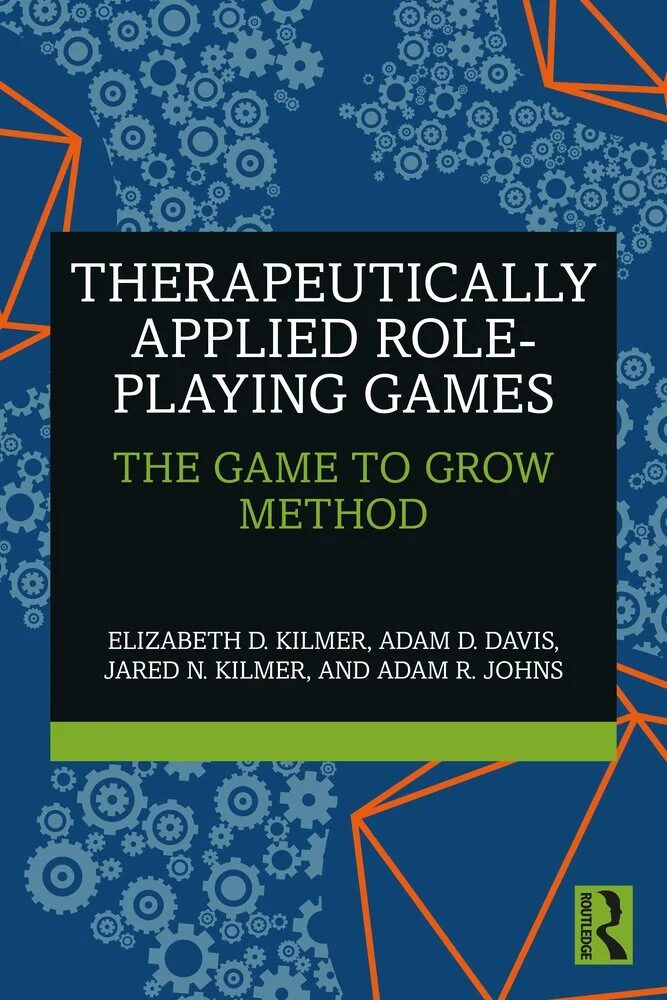
A game session is based on structure developed and used by the nonprofit Game to Grow (info now located at STAR), which is detailed in Kilmer, Davis, Kilmer, & Johns’ 2024 text Therapeutically Applied Role-Playing Games. I worked through their certification program, benefitting from Dr. Kilmer’s and practitioner Hayden Jones’ expertise to discuss changes from their mental health and social skills focus to facilitate a focus on language and social communication.
So, a session begins with conscious establishment of a group dynamic. This usually involves separation into a designated and set-up space, along with a group cheer (think short sports chant).
Then, we check-in. In my sessions, this is a two-part question which are related and specifically address the individual players’ identified language and social needs. Often, it is set to engage a mental shift from player to character and a complex language response that includes subordinate clauses; at the same time it foreshadows likely events of the play.
For example, in a session where the players are likely to run afoul of a dragon’s fear aura, the questions might be “Do you, the person, fight, flee, or freeze in scary situations? Why?” and “Does your character react the same way? Why or why not?”
Following everyone’s answer to these questions, the events of the previous session are summarized in a specific narrative format. This serves the purpose of modelling a mature narrative episode, summarizing only the most important or relevant events of the story.
Eventually, the players are asked to provide components of this summary, until everyone contributes to this mature literate language example. Although this paragraph of explanation makes this opening structure seem lengthy, in reality, it can easily be completed in 5 to 10 minutes.
Then we begin play, which works very much like a typical game session. The differences are in the techniques that the GM uses, including coaching attention, modelling language, and redirecting focus to relevant events in game. We work very hard to meet the individual needs of each player as we work through exploration, combat, and role-play.
The play is the vast majority of the session. Play lasts in the vicinity of 60 – 70 minutes. At the end of play, either the GM or the players can work to summarize this session’s narrative. Not only does this help build the skill in the moment, it also serves as a memory aid and model for the following session.
The final component of the session is the check-out. Game to Grow uses 3 quick check-outs: a shout-out to a fellow player, statement of a challenge for the session, and a prediction for the next one.
Because my therapeutic focus is a bit different, I typically use 2 of these that specifically address the individual needs of my players. I found that many of the players with ADHD could not attend to more than 2 questions at the end of the play segment, especially when I needed to support the form of the language expression for players with challenges in that area.
Then, ideally, we repeat our cheer (or chant) and transfer back to regular life.
Do you have a favorite story that highlights how TTRPGs have helped one of your players?
Yes, a couple! I had a player who was really struggling with impulse control and a tendency to react aggressively in their life. On their third or fourth session of play, their father followed his excited child in the building and pulled me aside to tell me that this was the only activity all week where he didn’t have to fight to get the child to attend and participate. This child demonstrated large improvement in functional narrative and social skills in a 12-week session.
As part of our research, we also asked our players for their impressions of the program. One of the most reserved of our players asked us if they could continue to play. When we did continue the clinical program, they exited the first session by telling their father “I made so many new friends today.”
Finally, just over a year after we began the research and clinical program, I had a player whose mother emailed me out of the blue. This player had come in with fairly good skills and was dismissed at the end of the first 12-week program with skills appropriate for their age. The email was written as a thank you . . . because that reserved client, who had always felt “othered” by their disability, was just finishing their teen D&D session at the local library, and his mother was so excited that he was able to participate in a “normal” kid activity where he felt like he belonged.
What advice do you have for folks who are looking into applied gaming for therapeutic purposes OR what advice do you have for others who are looking to start their own practice using TTRPGs as a tool?
There are more and more organizations that will train you how to game therapeutically. There are whole textbooks about it. Gaming conventions are full of people who love to share their information.
Reach out. Learn and discuss.
It’s easiest to start in a system that you know well . . . but don’t be afraid to explore other options.
While I know D&D best, I’ve also learned the Pathfinder system, No Thank You, Evil!, Avatar: The Last Airbender, and others. In the end, using a system I enjoy is what keeps me excited when modifications for the players become challenging or time-consuming or even just too routine for words.
Thank you Dr. Springle for sharing with us!
Check out Dr. Springle’s therapy practice, Play on Words, here to learn more, sign up, or reach out!
If you liked this post, make sure to subscribe to the TTRPGkids monthly newsletter to stay up to date on the latest reviews, tips and tricks, game and podcast list updates, and more! Thank you for playing tabletop RPGs with your kids and sharing this awesome hobby with the next generation!
2 thoughts on “Interview with Dr. Springle about TTRPGs x speech language pathology!”